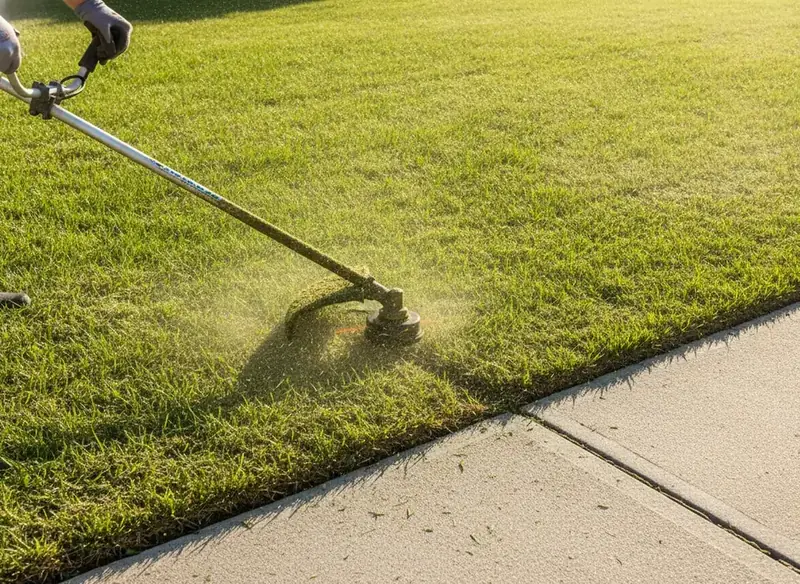
Cleanup, weeds and the lawn underneath
A cleanup is a good time to look at the lawn itself. Thatch, thin spots and weeds show up once the debris is gone. AgriLife’s Maintaining Bermudagrass Lawns recommends vertical mowing in May if thatch is more than ½ inch, and core aeration while the grass is actively growing. On mowing height, it lists 1–2 inches for common bermudagrass and says never to remove more than one-third of the blade at once.
For weeds, timing is everything. Pre-emergent products are applied in late winter to early spring, before weeds germinate, and you should follow the product label. AgriLife gives two reference points: soil at 65 °F (E-242) and crabgrass germinating when 2-inch soil reaches about 55 °F for three days (AgriLife Today, 2016). Goatheads are a summer annual that re-sprouts from seed each spring or early summer (New Mexico State University Extension); see how to get rid of goatheads.
In Texas, anyone who applies weed killers, insect or grub control, or other pesticides to a lawn for hire must hold a Texas Department of Agriculture (TDA) applicator license. Fertilizer-only applications do not require one. Before you hire, ask for the company’s TDA license number and verify it with TDA. Weed-and-feed products contain herbicide, so applying them for hire is a pesticide application. Hand-pulling, mowing and raking need no license.
This is general information, not legal advice.
For the full year at a glance, read the Lubbock lawn care calendar.